Every drying rack is a trade of floor area for drying length, and most buyers compare only the second number. That is the wrong way round. Floor area is the scarce thing in a small apartment, and it is charged in two different ways: a folding rack borrows it for an afternoon, a tower rents it by the week, and a ceiling airer takes none of it.
The numbers below come from manufacturer specification pages, and they are more complete than most buyers expect. What follows is how to put them into a single sum.
The bill is floor area times hours, not floor area
A drying rack’s real cost is the area it occupies multiplied by the time it occupies it, plus the area it occupies when it is put away. That is three figures, not one, and any two of them can look good while the third is bad.
A wing rack that opens to 6 square feet and folds to nothing is cheap in a room where laundry happens twice a week and expensive in a studio where the only place to stand it is the path to the door. A tower that holds a full load and folds to 2 inches deep is expensive in the moment and free the rest of the time. A ceiling airer is free on the floor and costs you the ceiling, the joists and a step stool.
So the question is not “how much space does it take”. It is “how much space does it take while it is doing the thing, and how much does it take while it is not”.
A folding rack claims about six square feet, for a few hours
The most common shape in a US apartment is the accordion wing rack, and Household Essentials publishes the numbers for its expandable model: 34.5 inches high, 20 to 34.5 inches wide, 24.5 inches deep when open, with 23.75 feet of drying line across nine telescoping rods. Target lists the same model as holding up to 50 pounds.
At full extension the footprint is 34.5 by 24.5 inches, which is 845 square inches, or 5.9 square feet. At its narrowest it is 20 inches wide, which cuts the footprint to about 3.4 square feet — the same rack, two very different claims on the room, and the difference is whether you need to dry beach towels or socks.
The wooden X-frame version is bigger in every direction: 52 inches high, 34.5 wide and 18.5 deep, with 29 feet of line. Its published weight limit is 25 pounds, half the metal rack’s, which is the first hint that line length and capacity are separate things.
A tower holds more and charges rent all week
The tower is the opposite bargain. Brabantia’s 23 metre Tower runs 135 centimetres high, 67 wide and 5 deep folded, which is 53 inches by 26 by 2 — narrow enough to stand behind a door and shallow enough to forget. Brabantia’s own description of the floor it needs is one square metre, or about 10.8 square feet, with 23 metres of drying line, or 75.5 feet.
Its bigger sibling, the 30 metre HangOn Tower, publishes both the folded and the working dimensions: 76 by 5 by 163 centimetres folded, opening to a 76 by 59 centimetre footprint, or 29.9 by 23.2 inches. That footprint is 4.8 square feet, less than the 23 metre model’s stated square metre, and the reason is shape: the HangOn is a rectangle that fits a corner, while the 23 metre Tower spreads wings on both sides.
The number that separates a tower from a wing rack is not the area. It is that the tower never has to be put away. It rolls, it holds a load while rolling, and it folds to 2 inches against a wall. In a laundry closet that is the difference between a rack you use and a rack you avoid because setting it up is a job.
Ceiling and wall move the area off the floor entirely
The two mounted options solve the floor problem by not having one.
Brabantia’s WallFix is a fold-out rotary: 24 metres of line, folded to 108.5 by 14 by 15.5 centimetres — 43 by 5.5 by 6 inches — against the wall. Retail listings give its open footprint as 182 by 184 centimetres, which is 36 square feet of swept area. That sounds enormous until you notice it is airspace at chest height over a floor you can still walk on, which is a different thing from floor you cannot use.
The ceiling pulley airer, of which the Sheila Maid is the long-running example, is 145 by 56 centimetres of ceiling — 57 by 22 inches — with a published capacity of 8 kilograms, or 17.6 pounds. It takes zero floor area, uses the warmest air in the room, and requires a ceiling you are allowed to screw into. In a rental that is usually the end of the conversation.
Both mounted options share one hidden cost: installation. WallFix ships with fixings and a drilling template, and the wall has to be solid. A ceiling airer needs joists, and joists run in one direction, so the unit has to be oriented across them or given a bearer.
Drying length is not capacity
The two figures get used interchangeably in listings and they measure different things. Drying length is how much line you have; capacity is what the frame can carry. Line length tells you how many garments you can hang without them touching, which is a drying-speed question. Capacity tells you whether the frame will hold them, which is a safety question.
Brabantia’s own numbers let you check the two against each other. The HangOn holds 25 kilograms evenly distributed and is described as taking three machine loads, and the 30 metres of line is consistent with that: at a typical 8 kilogram drum, three loads is 24 kilograms, just under the limit. The 23 metre Tower is described as two loads and publishes no load figure at all, which is not the same as having no limit.
Where the two diverge is on a wooden rack: 29 feet of line and a 25 pound limit means the frame runs out of strength before it runs out of line. Hanging wet jeans along the whole length of a rack rated for 25 pounds is how the dowels bow.
The number nobody publishes: folded size
Almost every listing gives the open dimensions. Very few give the folded ones, and the folded size is the number that decides whether the thing lives in your hall closet or leans against the wall in the bathroom forever.
Brabantia publishes it for all three of its shapes, which is one reason its products are easy to plan around. Household Essentials publishes it for its bamboo folding rack — 29.25 by 19.5 by 4 inches closed — but not for the expandable metal model. If a listing does not state a folded size, assume it folds to the depth of its widest hinge and no thinner, and plan accordingly.
There is a practical test for this in a store, and it takes ten seconds: fold the display unit and look at how much of the floor it still covers. A wing rack that folds to a 6-inch slab is a different object from one that folds to 14 inches, even when both claim the same open area.
Choosing by room rather than by rack
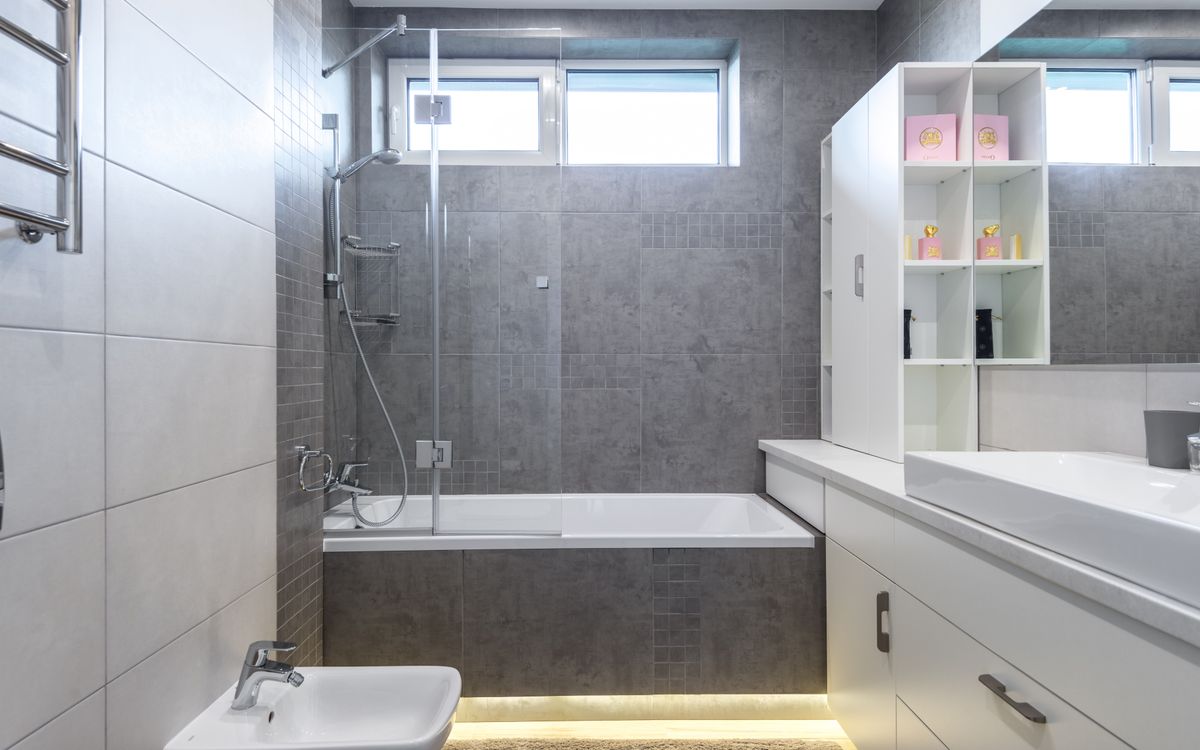
In a bathroom under 40 square feet, the answer is usually a wall or ceiling mount, because 6 square feet of floor is 15 percent of the room. If mounting is not allowed, a tower that folds to 2 inches and stands in the tub is the next best thing: it uses floor you are not standing on.
In a laundry closet, the tower wins on ergonomics. It holds a full load, rolls to the machine and back, and does not need to be unfolded and refolded every wash day. The 4.8 square feet of a HangOn footprint is smaller than most people expect from the photographs.
In a garage or a spare room, the folding wing rack is the right tool because the floor is free and the rack can live folded on a hook for 51 weeks of the year. That is also the case where a cheap rack is genuinely adequate.
One combination deserves a warning: a tower plus a folding rack is how small laundry rooms end up with no floor. If you own both, the folding rack should be stored, not standing.
Three numbers to write down before you buy
First, the open footprint at the width you will actually use, not at maximum extension. Second, the folded footprint, which is the one that decides storage. Third, the load figure, which is often absent and should be treated as unknown rather than generous.
If you are choosing a rack for a bathroom you are also reorganising, the same space arithmetic governs towel storage that dries, where the rack and the towel shelf compete for the same wall. For the no-drilling version of the bathroom problem, small bathroom storage without drilling compares the three systems on load. And if the rack is part of a larger laundry reorganisation, laundry sorting station covers the floor area the sorting itself takes.